Looking for a stand fan
One of my fans spoilt and I have been looking on-and-off for a replacement, but have not found anything I like. In the mean time, I either suffer from the heat or I turn on the air-con.
I decided to look again, this time with lowered requirements.
I found one very quickly: NNIO 16" stand fan for just S$72!
Good: 16", DC motor, white color. Bad: wide base. Rated 33W with 2,157 CFM. Max 63 dB(A).
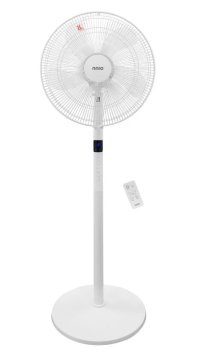
NNIO N1650
I almost got it, but searching a bit more, I found a Philips 16" model that can be controlled through app, which is a plus. I intend to put it at a "remote" corner. Being able to turn it on and off using my handphone is a huge convenience.
It costs S$85. Too bad it comes in black only. Rated 48W with 1,508 CFM. 19 to 46 dB(A). It is much weaker than N1650.
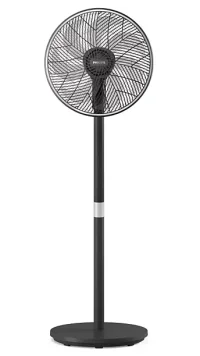
Philips CX3550
I checked the spec for my existing 16" KDK M40KS fan. It is 59W with 3,249 CFM. It should be around 2,215 CFM at low speed (987 vs 1,316 RPM). Its lowest speed has more wind than the above two fans at their highest speed.
Aesthetic or wind? :lol:
'Forced' upgrade to U24.04
I got a new WiFi USB adapter based on Mediatek 7921AU. Not only does 'survey dump' not work, but the card also hangs super easily.
I was running U22.04 with HWE kernel 6.8.
Gemini seems to imply the driver is more stable on U24.04, so I upgraded
to it. The upgrade hung midway — it seemed to be waiting for user
input — but luckily it could continue by running dpkg
--configure -a.
(I thought of upgrading to U26.04, since it is already out, but it uses Wayland, I don't know if I can VNC into the PC. I'm running it headless, so it is important.)
It didn't work. It is the same 6.8 kernel, just a few revisions newer. Gemini then again imply it'll work on HWE kernel 7.0, so I upgraded to it. It still didn't work.
Finally, Gemini said 'survey dump' does not work on mt7921. Technically, it did not lie. Upon further questioning, it said mt7921 supports 'survey dump', but the values are zero due to missing hardware support. :duh:
When I first asked which chipset supports 'survey dump', Gemini recommended Mediatek 7612. I got a USB adapter based on it, but the seller sent me a card based on rtl88x2 — same as my existing card. I returned it.
I was going to get another Mediatek card, but I thought why not look for an updated chip with AX support? Gemini said mt7921 supports 'survey dump'. I also thought mt7921 was a superset of mt7612.
The hang issue should be due to my motherboard. It cannot supply enough power — even for USB 3.0 ports. I tried the card on another computer and it seems fine.
Third time's the charm?
Twelve Kingdoms: Sky at Dawn

Part 2 is out and I bought it. But that's it, I don't think I'll buy more.
The story, when you read it, is pretty good. But if you give it some thought after that, it has too many coincidences and the relationship web is small and too connected.
It's still a good story. I wish the setting and the characters' thoughts are more fleshed out.
The 3 girls also spent very little time together. This is their individual stories before they met and how they met. I'll love to read more of their adventures where Youko is travelling incognito. Perhaps in a future book, but there's no such book.
Wi-Fi innovations
|Std|Band|Max data rate (per stream)|Modulation|Innovation|
|---|+--|+--|+--|+--|
|G|2.4|54 Mbps @ 20 MHz|OFDM, 64-QAM, 3/4|OFDM at 2.4 GHz|
| |
|N|2.4, 5|72.2 Mbps @ 20 MHz
150 Mbps @ 40 MHz|OFDM, 64-QAM, 5/6|40 MHz channel
5 GHz band
MIMO|
| |
|AC|5|86.7 Mbps @ 20 MHz
200 Mbps @ 40 MHz
433 Mbps @ 80 MHz|OFDM, 256-QAM, 5/6|160 MHz channel (rare)
MU-MIMO
beamforming|
| |
|AX|2.4, 5|143.4 Mbps @ 20 MHz
286.8 Mbps @ 40 MHz
600.5 Mbps @ 80 MHz|OFDMA, 1024-QAM, 5/6|RU (Resource Unit)
UL/DL MU-MIMO
BSS Coloring
TWT (Target Wake Time)
Preamble puncturing (optional)|
| |
|AX-E|6|1.2 Gbps @ 160 MHz|–|6 GHz band|
| |
|BE|2.4, 5, 6|172.1 Mbps @ 20 MHz
344.1 Mbps @ 40 MHz
720.6 Mbps @ 80 MHz
1.44 Gbps @ 160 MHz
2.88 Gbps @ 320 MHz|OFDMA, 4096-QAM, 5/6|320 MHz channel
MLO (Multi-Link Op)
MRU (Multiple Resource Unit)
Preamble puncturing
AP coordination|
802.11ax is about overall efficiency. It can serve 9 clients (via 9 RUs) in a 20 MHz channel in one time unit vs 1 in earlier standards. It has lower latency and higher efficiency for small packets.
802.11ax, for the first time, acknowledges that there can be multiple uncooperative APs. BSS coloring is a good idea, but it doesn't work as well in the real world for two reasons:
- It is needed the most in 2.4 GHz band, but channels overlap, so APs still can't cooperate
- Neighbouring signals are still too strong in apartments
Preamble puncturing is rarely implemented in consumer routers. However, it is still very limited even in 802.11be. It allows one 20 MHz hole for 80 MHz channel, one 20 MHz or 40 MHz hole for 160 MHz channel, one 40 MHz and one 80 MHz hole for 320 MHz channel.
Most of these combinations are useless in home environments because people normally use 80 or 160 MHz at 5 GHz.
802.11be adds AP coordination. Now unrelated APs can cooperate when using the same channel.
4096-QAM is achievable under ideal, short-range (1.5m) and line-of-sight. It needs 40 dB SNR. If floor noise is -90 dBm, then the min signal strength needed is -50 dBm (for 20 MHz channel). Normally, 256-QAM (30 dB) and 64-QAM (24 dB) are more realistic.
Poor man's WiFi spectrum analyzer
2.4 GHz is crowded. Even non-DFS 5 GHz is pretty crowded. The question is, how much?
The RT-AX82U has two metrics: noise and channel utilization. Right now, it is showing -89 dBm for noise and 18% utilization for 2.4 GHz channel 9. Both are very good!
Unfortunately, it is only for the current channel.
As far as I can find, the lowest-end router/AP that has dedicated spectral analyzer is the U7 Pro XGS (replaces the Pro Max model). It can map all bands and interference from all sources — including non-WiFi ones, this is crucial — "simultaneously". It uses only one radio to do so, I presume it takes some time to sweep through all the channels.
I'm surprised this is not more common — I thought nerds would be interested in such info. Maybe they don't live in such high-density housing as Singapore. We can expect 10 neighbours in HDB/condo housing.
The U7 Pro XGS plus a PoE++ injector is pretty costly, though.
After many days of googling for alternatives, I came across this command:
sudo iw dev wlan0 survey dump
It shows noise level and busy time. Busy time includes non-WiFi interference — this is key. You can calculate channel utilization from it (busy time / active time). There is also 'receive time' to tell how much of 'busy time' is WiFi traffic. Neat!
I have a spare WiFi USB adapter — I used it to connect my notebook to my home network when its network card is flaky, but I notice it is dropping connection much less with UDR 7.
I should be able to collect some stats from my Linux box! :lol:
First problem. The 5.x kernel was too old. It did not have the driver out of box. Luckily, the kernel could be upgraded to 6.x by itself.
With anticipation, I ran:
sudo iw dev wlan0 survey dump
Nothing appeared. It turned out the WiFi card was based on Realtek 8822BU. Realtek chipset does not support wireless stats. What a letdown.
This works:
sudo iw dev wlan0 scan
It gives standard info from beacons that APs are broadcasting. I'm able to tease a bit more info compared to SSID scanner apps — probably because they want it simple for layman to use.
Some APs indicate channel utilization (from their PoV) and no. of clients.
It is a little more info, but it is not very useful. Will need a WiFi adapter that supports 'survey dump'.
Second thoughts about 2.4 GHz channel 1, 6, 11
Is it always right to choose channel 1, 6 or 11?
|Chn|Utilization|Interference (dBm)|
|---|---|---|
|1|41%|-66|
|2|33%|-54|
|3|37%|-78|
|4|18%|-86|
|5|19%|-83|
|6|45%|-75|
|7|23%|-54|
|8|23%|-78|
|9|9%|-96|
|10|27%|-74|
|11|46%|-22|
|12|15%|-86|
|13|11%|-88|
I have another router at channel 11, that's why interference is so high.
I'm beginning to wonder if it is better to use channels 3 - 4 and 9 - 10, especially if channels 1, 6, 11 are relatively weak, e.g. -75 dBm and below. Use neighbouring channels to overpower the weak signals instead of being forced to cooperate with them.
Notice that channels 4 and 9 are exceptionally clean.
By default, routers send beacon frames at 1 Mbps for 802.11b compatibility — this has not been needed for years! This uses ~2.34% airtime per SSID (assuming default 10 Hz broadcast rate). If changed to 6 Mbps (802.11g), it becomes 0.39%.
You can expect around 10 neighbours in HDB housing, with 1 to 3 SSIDs each.
UDR 7 cons
Cons:
- UI is less inituitive than Asus (maybe I'm not used to it; also, Asus is for home market)
- Runs very warm. RT-AX82U runs cool
- Uses 12W normally. RT-AX82U uses 4W
- No airtime fairness
- Unable to disable CCK encoding directly (must set min data rate to 12 Mbps)
- Beacon interval is hardcoded to ~100 ms (DTIM period can be changed)
- No control over OFDMA, MU-MIMO and beamforming (always enabled)
- Range is a little shorter than RT-AX82U
- Throughput also seems a little lower
Foolproof parental control
I'm still a long way from foolproof parental control, though I have some new ideas. Parental control without cooperation of client device is hard.
First, create a network for controlled devices. Apply a schedule to it. Problem: devices can still connect to guest network, so guest network needs a schedule too.
Unfortunately, routers don't log DNS queries — the first step towards blocking websites. Looks like there is no choice, will need to run a local DNS server. The router is responsible for redirecting external DNS queries and blocking DoT and DoH.
Dealing with DNS
Step 1: block DNS-over-HTTPS (DoH). This is not easy. UDR 7 has a traffic rule to block mainstream public DoH providers, but it is not comprehensive, of course.
Test:
curl --doh-url https://cloudflare-dns.com/dns-query https://example.com
Step 2: block port 853 (DNS-over-TLS). It is encrypted, so it cannot be redirected. Clients that do not switch to port 53 will fail to work.
Step 3: redirect all port 53 (DNS) to router. (In the future, this will be changed to the DNS server.)
An additional rule is needed if the DNS server is on the same subnet. The traffic must be routed through the router so that the DNS server does not reply to the client directly! (The client will see a different src addr and may reject the packet as spoofed.)
Adding this rule means the DNS server won't be able to tell which client made the request, as they all come from the router. The fix is to put the DNS server in its own subnet.
QUIC
QUIC is 'replacement' for TCP and is used for HTTP/3. It runs over UDP port 80 and 443. It uses UDP port 53 for DNS, but sometimes UDP port 443 (DoQ; DNS-over-Quic). Due to lack of support for blocking DoQ, the whole port has to be blocked.
VPN
VPN is a massive loophole. Either block well-known ports or deny all and whitelist selected ports — and do some sort of packet inspection to ensure no tunneling. This is reaching enterprise-level setup!
Mobile
Mobile remains an ever loophole. The mobile device can be under parental control, but it can create a hotspot and let other devices connect to it. The only solution is to block the ability to enable hotspot.
Home network setup 2026
|Network|AP|Mode|Band|Chn|Purpose|
|---|+--|+--|+--|---|+--|
|A|UDR 7|Router|5 GHz, 6 GHz|–|Home|
|B|UDR 7|Router|2.4 GHz|1|Home|
|C|AX82U|AP|2.4 GHz|11|IoT|
|D|AX82U|AP|2.4 GHz|11|Guest|
Network B is for coverage. I don't like to mix 2.4 GHz and 5 GHz as I have bad band steering experience. Maybe it is better now.
6 GHz uses 5 GHz for out-of-band discovery — it is much faster.
Network C is the AP's primary network. Asus router cannot define guest network alone. I repurpose it as the IoT network because in AP mode, Asus router enforces client isolation on guest networks — no option to disable it.
Network D is a guest network. It is client isolated.
Networks C and D only have access to Internet. Only the AP is accessible from the intranet — needs explicit firewall rules.
In hindsight, I could have done the same with a pair of AX82U, which I already have.
|Network|Mode|Band|Chn|Purpose|
|---|+--|+--|---|+--|
|A|Router|5 GHz|–|Home|
|B|Router|2.4 GHz|11|IoT|
|C|Router|2.4 GHz|11|Guest|
|D|AP|2.4 GHz|1|Home|
The UDR 7 has more advanced routing, though. AX82U is like a toy next to it.
A prosumer router

UniFi Dream Router 7
Specs:
- Tri-band: 2.4 GHz, 5 GHz, 6 GHz
- WAN: 1x 10G SFP+, 1x 2.5 GbE
- LAN: 3x 2.5 GbE — 1 w/ 15.4W PoE (802.3af)
- Antenna: 3x 2x2 (one for each band)
- Antenna gain: 5 dBi (2.4 GHz), 7 dBi (5 GHz), 6 dBi (6 GHz)
- Transmit power: 22 dBm (2.4 GHz), 26 dBm (5 GHz), 23 dBm (6 GHz)
- VLAN: 802.1Q
- Max power consumption (itself): 26W
- CPU: Cortex-A53 at 1.5 GHz
- Memory: 3 GB
- Weight: 1.1 kg
UDR 7 is a good beginner's entry into UniFi's ecosystem. No messing with separate router, switch and AP.
It costs around S$450. It is more expensive than mid-end Asus routers, but not high-end ones.
UDR 7's one con: it cannot be used as AP. If you outgrow it and buy a higher-end router, you cannot repurpose it as an AP. (Well, you can, but it is unmanaged.)
UDR 7's PoE is only sufficient to drive UniFi U7 Lite (13W). U7 Lite supports 2.4/5 GHz and has 2x2 antenna. You need U7 Pro Max to get 4x4, and it comes with a dedicated radio for real-time spectral analysis. Cool. It needs 25W using PoE+.
U7 Pro Max has been succeeded by U7 Pro XGS. 10 GbE, requires PoE++ (29W). Both have dedicated antennas for different bands and run super hot — like 60°C. They are also quite big physically.
The dedicated radio for scanning means both of them support zero-wait DFS. This is super useful if you are in a DFS-heavy zone.
UniFi APs are super expensive. It seems like an overkill to get an AP for 120 sqm — though you need a 6 GHz AP in rooms you want 6 GHz speed. Rule of thumb for 6 GHz: line-of-sight.
Updated WiFi settings
I reviewed and updated my WiFi settings, last changed 3+ years ago. With time, better understanding.
2.4 GHz:
|Setting|Old|New|
|---|+--|+--|
|Auth|WPA2|WPA2/WPA3|
|Mode|N-only|Auto; disable b, enable ax|
|Channel width|20 MHz|–|
|Multicast rate|Auto|OFDM 6|
|Beacon interval|500|400|
|DTIM interval|2|–|
|Preamble|Short|–|
|TX bursting|Y|N|
|WWM no-ack|Y|N|
|Airtime fairness|Y|–|
|MU-MIMO|Y|N|
|Universal beamforming|Y|N|
|TX power level|Balanced|–|
N-only does not include AX, but includes G — I didn't know until I checked the router's Wireless log and found I have one G IoT device. :horror: Auto -11b +ax means it allows G, N, AX. Interestingly, one AC entry shows up on 2.4 GHz. AC is supposed to be 5 GHz only.
It is not possible to set min data rate on Asus router (stock FW). Some say for N-only, the min rate is CCK 5.5 Mbps, and for Auto w/ disable 11b, the min becomes OFDM 6.
I turned off all useless functionality.
5 GHz:
|Setting|Old|New|
|---|+--|+--|
|Auth|WPA2/WPA3|WPA3|
|Mode|N/AC/AX|–|
|Channel width|80 MHz|40 MHz|
|Beacon interval|500|300|
|DTIM interval|2|–|
|TX bursting|Y|N|
|WWM no-ack|Y|N|
|Airtime fairness|Y|–|
|MU-MIMO|Y|N|
|OFDMA|UL/DL|DL|
|Universal beamforming|Y|N|
|TX power level|Good|–|
I turned off all useless functionality. I reduced channel width to 40 MHz in return for some range, hopefully.
Shortlisting a new router
The 5 GHz radio on my Asus RT-AX82U spoilt all of a sudden. It made me think if I should 'upgrade' my home network.
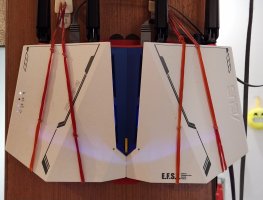
Wall-mounted Asus RT-AX82U
There are four things I want to achieve with my home network:
- IoT devices to be isolated from one another
- IoT devices have no access to intranet
- IoT devices to be on their own 2.4 GHz channel
- All DNS queries must go through the router
The first two are simple. Just put them in a guest network with no intranet access. Asus routers will turn on client isolation as well.
The problem is that in the past, Asus routers do not support VLAN tagging, so devices connected to an AP (Access Point) that is connected to the main router using a LAN port can access the intranet. It basically means guest networks can only be created on the main router.
VLAN tagging is a very new feature on higher-end Asus routers, e.g. RT-AX88U Pro (2023).
There was a time I used a main router and an AP (which was another Asus router in AP mode), with the intention of creating stronger signals throughout the flat. But it did not help because I was unable to place the AP optimally, so I reverted to a single main router setup.
A centrally placed router provides sufficient coverage for a square-shaped 120 m^3 flat, at least for light use.
There is no issue with IoT devices isolation as long as I don't use AP.
On the third point. It is not enough for IoT devices to be on a different SSID, they have to be on a separate 2.4 GHz channel. Most people use 5 GHz band for normal devices and leave 2.4 GHz band entirely for IoT devices. I want to go the extra mile to 'physically' separate normal 2.4 GHz devices from IoT devices. As far as I can find, there are no routers with two 2.4 GHz radios. So, a router and an AP is needed.
Why do I want to do this?
First, clients are constantly broadcasting probe requests. It is fine if there are 10 IoT devices. I have >20 now. Plus, some IoT devices are super chatty.
Second, especially on 2.4 GHz band, Asus router sends beacon frames at 1 – 2 Mbps (taking 2.85 ms) for compatibility with 802.11b. There is no way to set the minimum basic data rate. It will be fine if we can set the min to 6 Mbps (802.11g).
One SSID is unavoidable. What about three SSIDs? (One main + one guest + one IoT.) Beacon frames are sent every ~100 ms by default. They take up around 10% of the airtime.
2.4 GHz is also super crowded in HDB — at least I think so, I don't know without a spectral analyzer. Even excluding destructive interference, each SSID uses 3% airtime and there is typically 3 – 5 SSIDs per channel. I estimate each router serves 5 – 10 devices. A 20 MHz channel has 144 Mbps theoretical bandwidth. This is 5 – 7 MB/s in the real world.
The last point is for content filtering. Unless we have enterprise-grade network equipment that does deep-packet inspection, all filtering is done at DNS level. This is not too difficult, but is not 100% effective. Block/redirect outgoing ports 53 and 853 (DoT [DNS over TLS]). The problem is DoH (DNS over HTTPS). The only way is to block well-known DoH providers so that clients are forced to use normal DNS.
Everything I wrote above can be done with a pair of VLAN-unaware RT-AX82U routers — as long as guest networks are created on the main router only.
Socialism ascendance
The modern day "First They Came" poem:
First they came for the landlords, and I did not speak out because I was not a landlord.
Then they came for the businesses, and I did not speak out because I do not own a business.
Then they came for the grab drivers, and I did not speak out because I was not a grab driver.
Then they came for me and there was no one left to speak for me.
Everyone deserve a place to stay, keep the rent low. Screw the landlords. They are rich and parasites, anyway.
Everyone deserves cheap groceries, keep the prices low. Screw the small businesses, the people who thought you would help them.
Everyone deserves a cheap fare. Screw the drivers. They can afford to drive, they should pay for it.
Socialism is rising in popularity. The reason is simple. When you come of age, but you are saddled with debt (either student or credit card) due to your own immature and stupid choices, and there is no way out of the hole you dug for yourself, and you see the older generation "living well" — the kind of life you dream of, but can never achieve. You want to enjoy the fruits, but not put in the labour, cos success should be easy, just like in Hollywood movies, right?
What do you do? You want social re-distribution, "to make it fair". That's socialism. Socialism promises welfare, free stuff. It needs a lot of money. When they first come into power, they will fund it through increased taxes. Tax the rich! It's popular. The rich should "pay their fair share".
It's not that the tax isn't high. It's that the rich have too many ways to avoid tax. Then they flirt with wealth tax — tax for being wealthy. Headline, $1 billion networth, but is actually only $100 million in the bill. That's still ultra-rich, right? The problem is these bills will come down over time. In the future, it will be lowered to $10 million, then $1 million. No $1 mil? They will include your future potential. People who don't know history is doomed to repeat history.
The most funny thing to me is that you don't need id to vote, but you need id to buy subsidized stuff. Yeah, they need to make sure you are eligible for subsidized stuff — cos it costs real money. Hmm, don't you need to check if someone is eligible to vote? Oh no, because it will cost them votes. It's so absurd that you can only laugh at it.
Does socialism work? Margaret Thacher (former PM of UK) puts it best: "The problem with socialism is that you eventually run out of other people's money."
The D party is now overrun by socialists. Their traditional candidates have lost to socialists upstarts. They counted on the liberal, the woke and the socialists for years, they are just reaping what they sowed. You play with fire, one day the fire will consume you. The socialists have grown big enough, they don't need the 'old guards' anymore, and they finally reveal their true colors.
D is getting a taste of its own medicine. Couldn't have happened to a bunch of nicer folks...
What I don't understand is rich white young woke liberals supporting their cause. Don't they know they will be the first on the chopping board after the 'revolution'?
Surely they couldn't have seen it coming...
Trump calls this group of people "communists". He is right and wrong. They are socialists. They believe in private property — theirs. Everyone else, they have to "share". But Trump uses 'communists' because America is fearful of the godless communists, so it is good to use that label. Americans have no experience with socialism. But they are far more insidious. They look harmless — until they get into power. Then it's too late.
"Beware of the man who gives you free things. One day he will take from you to give others."
Don't cry for me, Maju Forest
HDB announced they would build new HDB flats at Maju Forest and Gillman Barracks.
Many people immediately voiced their opposition and asked the Government to reconsider. If you are in Singapore long enough, you know when the Government announces something, it is already a done deal.
Sometimes, the Government does not want to give the real reason (because it is too politically sensitive), so the reasons they make up can be rather comical.
Singapore has been clearing a lot of greenery for housing. Maju Forest is just next on the list. To the city planners, there is no point keeping these greenery around, they are just wasted space.
Whatever wildlife, cooling effect, they can be sacrificed. You can't put a value on them, so they have no commerical value.
Some people dismissed Maju Forest as a mere secondary forest, the implication being that it has no worth and can always be re-grown. It ignores the fact that it has taken root and has become a natural forest.
I dare say if the greenery is not Bukit Timah Hill, MacRitchie Reservoir or Botanic Gardens, it is on the table. Sungei Buloh Wetlands Reserve is a marsh, so it is safe, but they will build right up beside it.
Personally, I am more attached to Gillman Barracks. The place is so serene. The old buildings are so full of charm. It's like you travel back to a bygone era — a time where life was slower and less stressful? In the future, it will just be another cookie-cutter HDB housing estate.
The Gillman Barracks we see today is actually quite new. It has been "renovated". It was relaunched as a arts cluster in 2012. The Gillman Barracks before was restaurants, bars and furniture shops — more full of life.
SLA launched a S$2 million rejuvenation project in 2022 to give Gillman Barracks new life. It tried to make it into another Dempsey Hill, but it did not work out.
Why does HDB need to clear land?
There has been a shift in policy how HDB 'recycles' old flats. Previously, it was done through SERS. SERS is costly for HDB, the tenants get a cheap upgrade in the same area and most important of all, it resets their 99-year cycle.
VERS was announced in 2018. Basically, HDB will buy back flats over 70 years old, obviously at reduced price. The other important thing is that it does not come with a replacement flat — no more lease reset!
HDB's strategy is to build new flats until it can recycle flats using VERS. The loop is then formed — it can then reclaim the land and build new flats. No new land is needed. No flats have reached 70 years, but some are very close — 2030. In the mean time, existing 'free' space needs to be used. Wildlife, conservation? Sorry!
By doing this, flat 'owners' don't get a cheap upgrade — and lease reset — at HDB's expense. No more free lunch, oops!
The first few batches of VERS should be quite attractive. Otherwise the residents will vote no — they need a place to stay, or they can rent the place out.
Rental value is a good estimate of the flat's residue value. If rental is $1k/month, its A.V is $12k. 30 years is $360k.
(This assumes rental drops drastically after 80 years old as the flat gradually falls into disrepair. The last 10 years will be rough.)
Reminiscing ND songs
The three classic ones:
- Stand Up for Singapore ('84)
- Count On Me, Singapore ('86)
- We Are Singapore ('87)
Stand Up for Singapore is very upbeat and energetic.
Count On Me, Singapore asks not what Singapore can do for you, but what you can do for Singapore: "We have a vision for tomorrow." It is about a future that is shaped by you. Singapore counts on you.
We Are Singapore starts with a very emotional "There was a time when people said Singapore won't make it, but we did". The song is about feeling Singaporean. "This is my country, this is my flag." It also integrates the pledge into the song. That always choke me up.
Sadly, it is difficult to feel the Singaporean identity today, and it is difficult to see a livable future. Perhaps that's why I get emotional when I hear these songs. The future I imagined in my childhood, only existed in my imagination.
BK rendang beats McD hands down!

McDonald's came up with a Rendang curry beef burger this year. I waited enthusiastically for it and I tried it on the first day it came out — 23 July.
It was bland. Super bland.
BK finally released their yearly special Rendang burger a few days later. The price seemed to have increased ($8.30) and the burger was visibly smaller. But it tasted good!
Samsung green line issue

Samsung has a problem with its S line of phones. The phones started to have green lines starting with S20.
My S22 developed a green line just under 3 years. I got it changed. And now, 2+ years, it developed green lines again.
It first developed a green line at the left edge in May. Then another line at the right edge a month later. It developed a bright green line late last month. This was the most infurating. It was a faint line, then I rebooted the phone. For some stupid reason, Samsung used max brightness when booting up. And it did some "UI optimization", so it was stuck there for quite some time. The green line turned from faint to bright.
It is a common feedback that green lines show up during firmware upgrade — the screen is at max brightness for the entire process. It is hard to believe, but setting brightness to max just exacerbates its formation. Samsung claimed to have lowered the brightness, but it is still rather bright.
The green lines are due to damage to the display cable. I believe the cable is routed around the battery, and when the battery bloats with age, it stresses the cable and causes this. It is a design flaw.
Another green line just formed. Looks like it is worsening.
I was hoping the phone would hold out until S27 next year. Previously, S22 was expected to get One UI 8.5 — what 8.0 was supposed to be — but because of delays, it got past the 4 years OS upgrade cycle. It was disappointing.
(S24 onwards have 7 years of software support.)
Sadly, S27 may be cost prohibitive due to high RAM and flash price — it may be more expensive than a decent notebook.
More toon CHUG transformers

SS86 Blitzwing
So much more beautiful in its toon colors. Too bad it is still quite heavily greebled.

SS86 Cyclonus
The parts prone to yellowing have been changed. I expect high demand for this.

SS86 Cliffjumper
Remold of SS86 Bumblebee. I felt BB was not toon enough, but CJ is. The chibi car mode is perfect. However, the colors are off — gray crotch, black limbs and black windscreen. They are supposed to be black, gray and light blue. I'll consider buying if I can paint them.
Quasi-legal tax avoidance scheme
News: IRAS nabs 279 high-income earners over sham arrangements to pay less tax
The taxman has caught 279 high-income earners to date for using sham arrangements such as setting up private companies to receive their income to avoid paying more tax.
Out of this group, the Inland Revenue Authority of Singapore (IRAS) probed 124 cases from 2021 to 2025 and clawed back $49 million in additional tax.
All but one of these cases involved taxpayers extracting profits as tax-exempt dividends or interest-free shareholder loans.
Unlike tax evasion, which is a crime involving hiding and falsifying income, tax avoidance by channelling funds through various arrangements is not an offence, but these moves can result in additional taxes and surcharges being levied if there is no real purpose for these transactions other than paying less tax.
Cases involving such taxpayers were highlighted recently when the High Court dismissed the bid of three doctors to challenge the decision of IRAS to levy more taxes on their total incomes.
Some of these errant taxpayers thought they could avoid the higher personal tax rate – 24 per cent for those with income exceeding $1 million – by channelling the bulk of their earnings to their companies because corporate profits are taxed at just 17 per cent here.
After-tax profits can be declared as dividends and paid to shareholders, who do not have to pay personal income tax on them.
These private outfits paid even less corporate taxes in reality because companies enjoy various concessions aimed at spurring growth and entrepreneurship.
But instead of using profits to expand business and hire more employees, these high-income earners merely used the structure to channel “tax-exempt” dividends and even non-genuine “shareholders’ loans” to themselves.
To deal with these taxpayers, IRAS took action under Section 33 of the Income Tax Act, which empowers it to disregard or vary any contrived arrangement and claw back the taxes that should have been paid.
In the recent dispute, the doctors challenged IRAS’ decision to conduct further tax assessments on their dividends and shareholders’ loans they paid to themselves from 2013 to 2018 through various private companies they had set up.
But the court upheld IRAS’ move to strike down their contrived schemes, finding that the doctors’ companies were mainly used as a conduit to pay less tax.
For instance, one of the doctors claimed to earn only $5,000 and $6,000 a month from his companies, but had received dividends and shareholders’ loans totalling more than $12 million over the six years.
With its now court-sanctioned action, IRAS can proceed to view the dividends and loans as part of the doctor’s own income and tax him accordingly.
In a statement to The Straits Times, IRAS said it takes a firm view on artificial or contrived arrangements that are put in place to avoid tax.
“Self-employed professionals, like all taxpayers, are expected to ensure that their tax affairs reflect the commercial and economic reality of their arrangements,” it added.
With effect from the year of assessment 2023, those caught for using contrived schemes to avoid taxes will have to pay a 50 per cent surcharge on the amount they should have paid.
This penalty is similar to that imposed on real estate investors who use sham agreements to avoid paying the additional buyer’s stamp duty when buying more properties.
This means that if the total additional tax payable is $200,000, the errant taxpayer will have to pay a $100,000 surcharge, or $300,000 in all to IRAS.
In many of these cases, those caught claimed their accountants or lawyers had advised them on the schemes.
On such excuses, IRAS said that taxpayers remain responsible for their tax affairs and should exercise caution when engaging tax agents and relying on advice they receive. “Tax agents are expected to provide advice that is consistent with Singapore’s tax laws. For errant tax agents, IRAS may refer matters of professional misconduct to the relevant professional bodies empowered to take disciplinary action,” it added.
Corporate income tax is 17%. Personal income tax goes up to 24%. As soon as you hear this, you can imagine there will be schemes to avoid paying more than 17%.
(Tax rate changes from 15% to 18% at $160k, then 19% at $200k.)
Because of incentives for startups and entrepreneurship, the first $100k or $200k are taxed very low. This reduces the threshold where this scheme becomes favourable. I guess it is above $80k — tax rate changes from 7% to 11.5%. This is quite a low bar.
I'm sure the tax-free dividend loophole was used once it became law in 2003. And before that, interest-free shareholder loans had always been available.
Guidelines for MP Transformers
I want to trim my MP transformers collection, but looking at the lists below, it is still a big number.
Worse, I have multiple of the same character for some.
First, I need to reduce the figures I want. Next is to cut down on multiple representations of the same character.
Season 1
|Group|#fig|Want?|Notes|
|---|---|---|+--|
|Autobots|
|Optimus Prime|–|Y||
|Skyfire|–|N||
|Carbots|11|Y||
|Minibots|6|Y|BB, CJ, Brawn, Gears, Huffer, WC|
|Dinobots|5|N|Except MP-8|
| |

|Decepticons|
|Megatron|–|Y||
|Soundwave|–|Y||
|Shockwave|–|Y||
|Reflector|–|Y||
|Seekers|3|Y|SS, TC, SW (no)|
|Tapes|4|Y|Laserbeak, Ravage, Frenzy, Rumble (no)|
|Insecticons|3|N|Shrapnel, Bombshell, Kickback|
|Constructicons|6|Y||
Carbots: Jazz, Prowl, Bluestreak (no), Sideswipe, Sunstreaker, Ironhide, Ratchet, Hound, Mirage, Trailbreaker, Wheeljack.
Wanted: 34 out of 44.
Season 2
|Group|#fig|Want?|Notes|
|---|---|---|+--|
|Autobots|
|Blaster|–|Y||
|Perceptor|–|Y||
|Carbots|8|Y||
|Minibots|5|Y|BC, Cosmos, PG, Seaspray, WP|
|Tapes|4|N|Eject, Rewind, Ramhorn, Steeljaw|
|Aerialbots|5|Y||
|Protectobots|5|N||
|Titans|1|Y|Omega Supreme|
| |

|Decepticons|
|Seekers|3|N|Coneheads|
|Triple Changers|2|Y|Astrotrain and Blitzwing|
|Tapes|1|N|Buzzsaw|
|Stunticons|5|Y||
|Combaticons|5|Y||
Carbots: Grapple, Hoist, Inferno, Red Alert (no), Skids, Smokescreen, Tracks, Hauler (no).
Wanted: 31 out of 46.
Season 3
|Group|#fig|Want?|Notes|
|---|---|---|+--|
|Autobots|
|Movie|9|Y||
|Triple Changers|2|Y|Sandstorm and Broadside|
|Minibots|5|N||
|Throttlebots|6|N||
|Technobots|5|Y||
|Titans|2|N|Metroplex and Sky Lynx|
| |

|Decepticons|
|Movie|3|Y|Galvatron (no), Cyclonus, Scourge|
|Quintessons|1|N|Sharkticon|
|Battlechargers|2|N|Runabout and Runamuck|
|Triple Changers|1|Y|Octane|
|Tapes|3|N|Ratbat, Slugfest, Overkill|
|Predacons|5|N||
|Terrorcons|5|N||
|Titans|2|N|Trypticon, Unicron (yes)|
Movie: Hot Rod, Rodimus Prime (no), Ultra Magnus, Arcee, Blurr, Kup, Springer, Wheelie (no), Wreckgar (no).
Wanted: 17 out of 51.
Season 4
|Group|#fig|Want?|Notes|
|---|---|---|+--|
|Autobots|
|Punch|–|N||
|Titans|1|N|Fortress Maximus|
|Headmasters|4|Y|Brainstorm, Chromedome, Hardhead, Highbrow|
|Targetmasters|3|N|Crosshairs, Pointblank, Sureshot|
|Trainbots|6|N||
| |

|Decepticons|
|Sixshot|–|N||
|Titans|1|N|Scorponok|
|Headmasters|3|N|Mindswipe, Skullcruncher (yes), Weirdwolf|
|Targetmasters|3|Y|Misfire, Slugslinger, Triggerhappy|
|Triple Changers|2|N|Apeface, Snapdragon (yes)|
|Misc|1|N|Banzai-Tron (yes)|
Wanted: 10 out of 26.
Pruning MP Transformers 2026
Time for another round of pruning!
I thought some of these were 'forever figures', but collecting criteria can change. I used to want a complete MP collection, but now I don't, so some of them don't make sense anymore.
- FT-07 Stomp (Sludge)
- FT-12T FT-13 FT-14 (Insecticons)
- IT-01 Emperor of Destruction (Megatron)
- Moon Studio Radiatron (Raiden)
- MMC RMX-06 Furor (Frenzy)
- MMC PS-01A Sphinx (Mirage)
- MTRM-07 Visualizers (Reflector)
- XTB MX-68J Conechrome (Slugslinger)
Stomp was one of my first 3P figures. Its selling point to me was its googly eyes after being stomped by Devastator in the '86 movie. It was considered lightly greebled in its day, but now it stands out in a sea of very-flat toon aesthetics. Moreover, I decided I don't want MP Dinobots anymore.
I used to want three sets of Insecticons — they are a swamp. Later, I changed my mind. I sold BadCube and kept FansToys — I never bought MMC. But now I don't want MP representation of them any more.
I sold MP-36 and kept IT-01. Now I decided to sell it as well. I want Megatron at MP scale, but I will wait for a better one — FansToys, Magic Square? IT-01 has yellowed (a common problem), so will be selling at great loss.
When I first saw Radiatron, I thought it was so accurate to the original toy, at least in combined mode. Their train modes are quite chubby. Now I think I just go for the Legends figures by Siyang Culture.
I bought MMC Frenzy due to its pile driver gimmick. However, they don't really work as in the show. They pile way too quickly. In the show, the pile drivers are very slow. The figure scales very well with other MP figures in bot mode — the usual mini-tapes are way too small. However, I don't need this in MP scale anymore.
MMC Mirage. I've put it up for years. When will it ever sell?
I used to want three sets of Reflector — they are Decepticon army builder. I never got FansToys Spotter cos it was never reissued. I won't be buying it anymore — it is dated — but v2 may change my mind. I decided to sell MakeToys and keep KFC for now.
I am selling XTB Slugslinger after getting it for around two weeks. This has to be a record. I remember I sold XTB Grump (Gears) pretty quickly too. XTB released MX-68T, the toy deco, that has a more 'Headmaster' head. I'm usually not interested in toy deco, but this time XTB gives user-applied stickers instead of tampo'ing the figure.
These will take some time to sell, based on previous experience.
95% happily married?
ST reported that "almost 95% of couples in Singapore report being happily married", based on the Family Trends Report 2026 by MSF.
This time, there was no huge controversy, though there were questions how this reconciled with high divorce rate.
This was the data ST referred to. A full 94.9% were happy.
|Degree of happiness||
|---|---|
|Perfect|8.1%|
|Extreme happy|22.7%|
|Very happy|30.7%|
|Happy|33.4%|
|A little unhappy|3.7%|
|Fairly unhappy|0.9%|
|Extremely unhappy|0.5%|
Is this reliable? There are three more charts.
||R/ship going well|Will confide|Consider divorce|
|---|---|---|
|All the time|19.9%|25.4%|0.9%|
|Most of the time|57.6%|37.1%|1.5%|
|More often than not|15.3%|15.8%|1.3%|
|Occasionally|5.3%|15.0%|8.0%|
|Rarely|1.5%|4.7%|22.1%|
|Never|0.4%|2.1%|66.2%|
First, "relationship going well", the truly positive is only 77.5% (all or most the time).
The "will confide in spouse" data does not mean anything. Some people like to keep things to themselves.
For truly positive, "considered divorce" must be Never. It is even lower at 66.2%. Even 'Rarely' means there are small cracks, and if not mended, will grow into big cracks. If you think about divorce occasionally, it means there are unhappy occasions, and they will grow over time. This calls into question the 'degree of happiness' data, though the positive percentage is still high at 88.3%.
What-if 80386 in an alternate world
Following our alt-286, we will enter 32-bit with our alt-386. :clap:
We can finally extend all registers to 32-bit and get a linear 4 GB memory space. No more messing with 24-bit address registers!
Or is it?
32-bit computing has a good run. It started in the late 1970s and lasted to early 2010s. Even today, 32-bit suffices for productivity apps. 64-bit became more common as the need to process >2 GB data arose: video editing, games, database, big data models, 3D modeling, machine learning, scientific simulations, virtual machines and so on. Wow, that's a long list!
What they want is >2 GB data, not necessarily 64-bit processing.
I use 2 GB limit because a 32-bit OS typically did not expect a single program to use >2 GB of memory. It was a lot of memory in the early 1990s.
Extending to 40 bits gives 5 byte address, which is awkwardly sized. So, let's use 48 bits — this makes the address 6 bytes. 48-bit allows us to address 256 TB of memory. This is future-proof — famous last words. :-D
So now we are back to asymmetric data register (32-bit) and address register (48-bit) again. Good thing is that we are already used to dealing with it. :lol:
Variable displacements
The 8086 supports 8-bit and 16-bit displacements. The 80386 supports 8-bit and 32-bit displacements in 32-bit mode. Should we support just two, or should we support more?
||8-bit|16-bit|24-bit|32-bit|48-bit|
|---|+--|+--|+--|+--|+--|
|Cond jump|✓|✓|–|–|–|
|Direct jump|✓|✓|✓|–|–|
|Direct call|–|.|✓|✓|–|
|Stack vars|✓|✓|–|–|–|
|Struct members|✓|✓|–|–|–|
|Array indexing|✓|✓|–|–|–|
|Memory addr|–|.|✓|✓|–|
|IP-relative|–|✓|✓|.|–|
|Constants|✓|✓|–|✓|–|
|Data pointers|–|.|✓|✓|✓|
|Function pointers|–|.|✓|✓|.|
Key: ✓ = useful, frequently used, '.' = nice to have, but not really needed, – = not needed
We do not want 48-bit immediate displacement, it makes the instruction too long. We may not want 32-bit as well. x86 has it, but RISC don't, and they do just fine.
We will use IP-rel addressing to load 32-bit and bigger immediates values.
Memory models
Does it make sense to bring back memory models? :lol:
- Small: code/data up to 64 kB
- Compact: code/data up to 16 MB
- Flat: code/data up to 4 GB
- Large: code/data > 4 GB
Memory model determines the default pointer size — how much code/data is addressable.
Code and data are separate, so it can be small code with flat data.
Most programs should fit in compact code and flat data. If the program handles data in streaming form, compact data is sufficient most of the time.
Stats from GHS '25
DoS (Department of Statistics) just released the General Household Survey 2025 report. It immediately caused a hooha in local forums when ST reported "about 1 in 7 S'pore families earn at least $30k a month". There was widespread disbelief.
How could there be so many, so high?
Many posters on HWZ's EDMW also expressed their shock. This is ironic given that they often used $20k/month pay as a benchmark.
One common explanation is that there is no real increase. Households now have more contributors because adult children stay with their parents due to high house prices.
Some say those who are in disbelief have been left behind... :sweat:
First, let's look at the Monthly Household Market Income table:
|Year|< 3k|< 6k|< 9k|< 12k|< 15k|< 20k|< 25k|< 30k|< 35k|35k+|
|---|---|---|---|---|---|---|---|---|---|---|
|2020|19.7%|15.6%|14.3%|12.3%|9.5%|11.0%|6.4%|3.8%|2.4%|5.0%|
|2025|14.6%|12.2%|10.9%|10.7%|10.0%|12.9%|9.1%|6.2%|4.4%|9.0%|
|2020 cum|0.0%|19.7%|35.3%|49.6%|61.9%|71.4%|82.4%|88.8%|92.6%|95.0%|
|2025 cum|0.0%|14.6%|26.8%|37.7%|48.4%|58.4%|71.3%|80.4%|86.6%|91.0%|
This is the first time income above $20k is broken down. In 2020, we only knew 17.6% earn above $20k. Even then, $20k was too low a bar. It is now raised to $35k — and almost 10% are above it.
$20k used to be 70th to 80th percentile (upper middle-income). It is now only 60th to 70th percentile (slightly above middle income).
Related stats:
||2020|2025|
|---|---|---|
|Avg|$12,396|$16,159|
|Avg per member|$4,111|$5,579|
|Avg employment income|$3,494|$4,439|
|Median|$9,099|$12,446|
|Median per member|$2,952|$4,160|
The average income has gone up significantly and 80% of income is from employment.
The average household size according to the above table is 2.90 (avg) and 2.99 (median). I don't know why they are different, or why they are different from the average household size (3.1).
Market income includes employer CPF, 1/12 of annual bonus and non-employment income, e.g. investments, rental, CPF payout. Some people say this is why the figures are on the high side.
For a single-income at $30k, the employer CPF contribution is only an extra $1.36k. For dual-income at $15k each (anything above $8k, actually), the employer CPF contribution is $2.72k.
If we assume a conservative 2-months bonus, it is $3.33k at $20k. (Using estimated employment income.)
Let's assume a more conservative non-employment income of 15% — $4.5k from a mix of investments and rental.
After adjusting all the factors, we get a figure of ~$21k monthly pay for $30k market income.
Individual income
GHS does not cover individual income, but DoS has an annual Gross Monthly Income From Employment report.|Year|Total|1.5k+|2k+|3k+|6k+|9k+|12k+|15k+|20k+|22.5k+| |---|---|---|---|---|---|---|---|---| |2020|1,945.8k|9.7%|17.5%|34.1%|70.1%|84.2%|91.4%|94.3%|96.9%|97.8%| |2024|2,067.2k|3.6%|9.4%|23.8%|61.3%|78.4%|88.1%|91.9%|95.6%|96.7%| |2025|2,100.4k|2.1%|9.1%|22.0%|59.2%|77.1%|87.2%|91.3%|95.3%|96.6%|
It includes 1/12 of annual bonus, but excludes employer CPF. It tops out at $22.5k — top 10% of EP holders. Candidates earning over this are exempted from standard EP point system.
In this table, if you earn between $20k and $22.5k, you are in the 95th to 97th percentile.
From 2020 to 2022, it's like lower-paying jobs just... disappeared.
There is another source of info: Taxable Individuals by Assessed Income Group from IRAS. It has only up to 2024, and it goes by tax residents. Data for 2024:
||> 0|> 20k|> 25k|> 30k|> 40k|> 50k|> 60k|> 80k|> 100k|> 150k|> 200k|> 300k|> 400k|> 500k|> 1mil|
|---|---|---|---|---|---|---|---|---|---|---|---|---|---|---|---|
|Number|74.9k|69.4k|125.7k|362.0k|295.0k|222.2k|169.6k|139.8k|213.1k|313.5k|150.9k|128.0k|50.9k|30.3k|9.2k|
|Avg pay|$0|$1.8k|$2.1k|$2.7k|$3.4k|$4.2k|$5.8k|$6.9k|$9.4k|$13.2k|$18.6k|$26.4k|$34.2k|$50.8k|$156.8k|
|%-tile|0.0%|3.2%|6.1%|11.4%|26.6%|39.0%|55.4%|61.3%|70.3%|83.4%|89.8%|95.2%|97.3%|98.3%|99.6%|
Avg pay is total assessable income in the band divided by the number of people in that band divided by 13 (w/ AWS).
How to read the table: if your assessable income is $200k - $300k (avg monthly pay of $18.6k to $26.4k), you are in the 90th to 95th percentile.
There is no figure for non-tax paying residents. I took the number of residents who earned less than $1.5k in 2024 — 74.9k. It is not accurate because 'residents' is not the same as 'tax residents', but it is much better than 0. This allows us to get income percentile for total employed population.
I blame high COE on easy loan and commerical use. I'm not so sure anymore after looking at this table. There are just too many high earners. There are more people earning $150k to $200k (313.5k) except for the $30k to $40k band (362.0k).
These people can own a car comfortably — car price should not exceed annual pay, remember?
Household size
||2020|2025|
|---|---|---|
|1 person|16.0%|16.7%|
|2 persons|22.6%|23.8%|
|3 persons|20.4%|22.6%|
|4 persons|20.1%|19.9%|
|5 persons|11.9%|10.9%|
|6+|9.0%|6.1%|
|Avg size|3.2|3.1|
To get average size of 3.2 in 2020, the 6+ avg is 6.x. In 2025, the 6+ avg size is 7.x.
The way I interpret this is, there are fewer 6-member households, leaving behind 7-members and above.
By living arrangement:
||2020|2025|
|---|---|---|
|Married w/ children|50.4%|47.6%|
|Married w/o children|16.8%|19.1%|
|Lone parent|9.3%|6.8%|
|One person|16.0%|16.7%|
|Others|7.5%|9.8%|
'Others' here can mean: grandparents w/ grandchildren, siblings-only, mixed relatives (e.g. uncle w/ nephew), divorced person living with widowed parent, elderly living only with domestic worker, unrelated roommates. The category is very broad!
The definition of lone-parent is very specific and may not be what you think. The household must:
- have no married couple
- at least one never-married / widowed / divorced / separated person
- living with his/her child(ren), who must be below 16 y.o. or not married
This table is not very useful, it is more useful when broken down by age group.
||Total|< 35|< 50|< 65|65+|
|---|---|---|---|---|---|
|Married w/ children|47.6%|34.0%|56.7%|55.2%|31.6%|
|Married w/o children|19.1%|27.4%|14.8%|12.5%|29.8%|
|Lone parent|6.8%|6.4%|5.3%|9.8%|5.0%|
|One person|16.7%|18.2%|14.5%|13.9%|22.3%|
|Others|9.8%|14.0%|8.7%|8.7%|11.3%|
For 2020:
||Total|< 35|< 50|< 65|65+|
|---|---|---|---|---|---|
|Married w/ children|50.4%|39.0%|60.3%|56.4%|30.2%|
|Married w/o children|16.8%|25.0%|11.3%|11.4%|30.6%|
|Lone parent|9.3%|6.5%|8.6%|11.9%|7.4%|
|One person|16.0%|19.2%|14.2%|13.6%|21.6%|
|Others|7.5%|10.3%|5.7%|6.8%|10.2%|
Can we tell if households now have extra contributors? Not directly, but indirect evidence says no. If only there is a number of contributors per household figure...
Mode of transport to work
||2020|Median time|2025|Median time|
|---|---|---|---|---|
|Public transport|57.7%|50 mins|60.1%|60 mins|
|Taxi/PHV|3.1%|30 mins|2.5%|30 mins|
|Car|21.1%|30 mins|21.2%|30 mins|
|Motorcycle|3.4%|30 mins|2.9%|30 mins|
|No transport|9.8%|8 mins|9.7%|5 mins|
(Does not add up to 100% cos I omitted a few categories.)
I find surprising is that only 60.1% of the people take public transport to work. A full 20% drive! Wow, that's a lot.
There is breakdown by type of property, which I think is more revealing.
||1 - 2-rm|3-rm|4-rm|5-rm n Ex|Condo n Apart|Landed|Others|
|---|---|---|---|---|---|---|---|
|Public transport|70.2%|69.9%|65.1%|59.5%|48.9%|32.6%|46.5%|
|Taxi/PHV|1.6%|2.1%|2.2%|2.1%|4.1%|3.0%|4.2%|
|Car|4.6%|7.8%|14.8%|23.2%|36.6%|51.4%|14.4%|
|Motorcycle|3.5%|3.5%|4.1%|2.9%|0.7%|0.4%|0.0%|
|No transport|14.9%|12.2%|9.7%|8.6%|8.1%|11.1%|31.4%|
'Others' is where the surveyed person stays with someone else without charge.
This must be used together with the following table:
||1 - 2-rm|3-rm|4-rm|5-rm n Ex|Condo n Apart|Landed|Others|
|---|---|---|---|---|---|---|---|
|%-age|7.3%|16.6%|31.2%|22.1%|17.9%|4.7%|0.2%|
|Household size|1.9|2.4|3.2|3.5|3.1|4.1|--|
51.4% of Landed residents drive, but they are only 4.7% of the total population.
For travelling time, median is not enough. We need at least 20th and 90th percentile. We also need breakdown by area.